p6k

The Platform › Detailed

The whole thing, drawn out

This is p6k under the hood — the same two loops, the same stages, sketched by hand. The drawings use our internal engineering vocabulary; the caption under each one translates it back to the plain-language names used elsewhere on the site.

Two loops, one rhythm
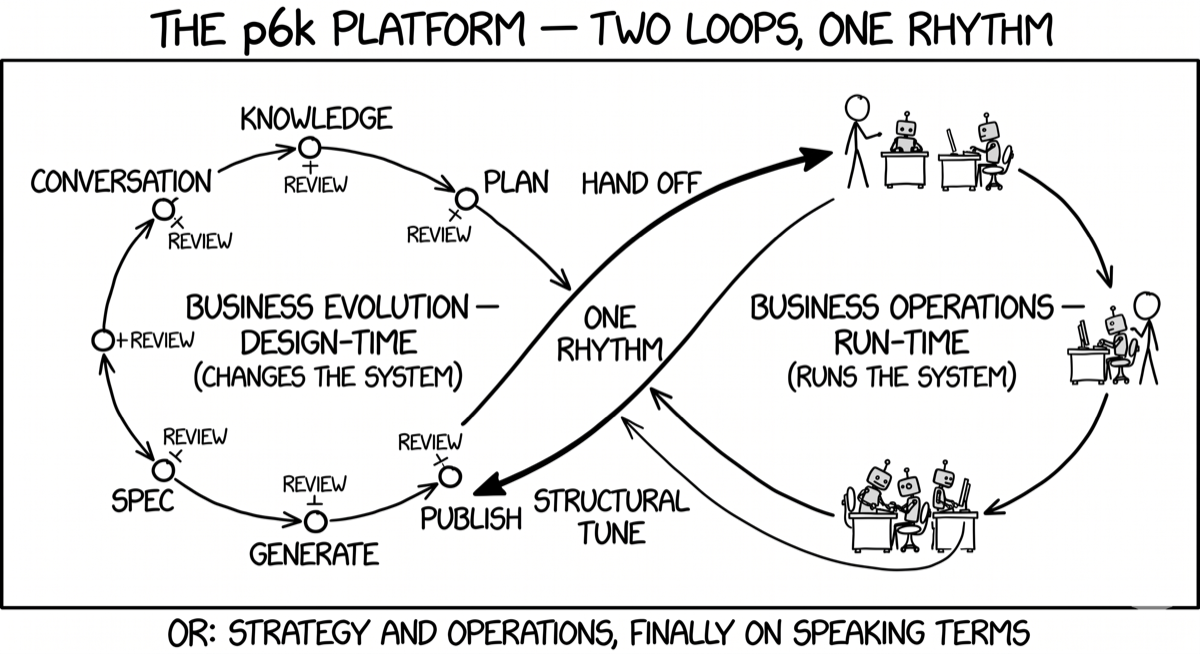
The p6k platform as a figure-eight: the top loop is Business Evolution (Conversation, Knowledge, Plan, Spec, Generate, Publish, each with a review gate), a HAND OFF arrow drops into the bottom loop Business Operations, and a STRUCTURAL TUNE arrow rises back up — crossing at the center into one continuous figure-eight.

Business Evolution defines the system; Business Operations runs it. Hand off drops a live system into Operations; structural tune sends a too-big change back up into a new Evolution turn.

Business Evolution, stage by stage

The design-time loop, from a conversation to a running system. Seven stages, two to a row:
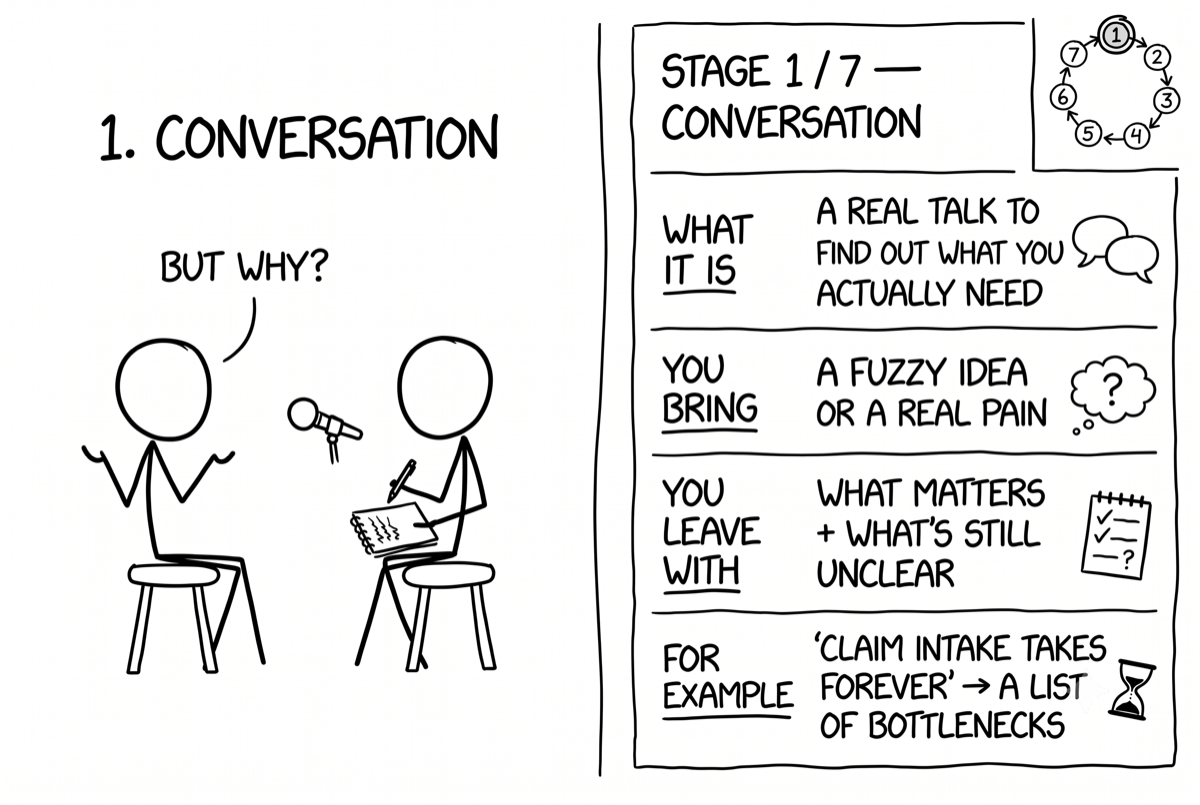
A stick figure and p6k in conversation, capturing how the business works.

Converse (drawn: Conversation) — capture how the business actually works.
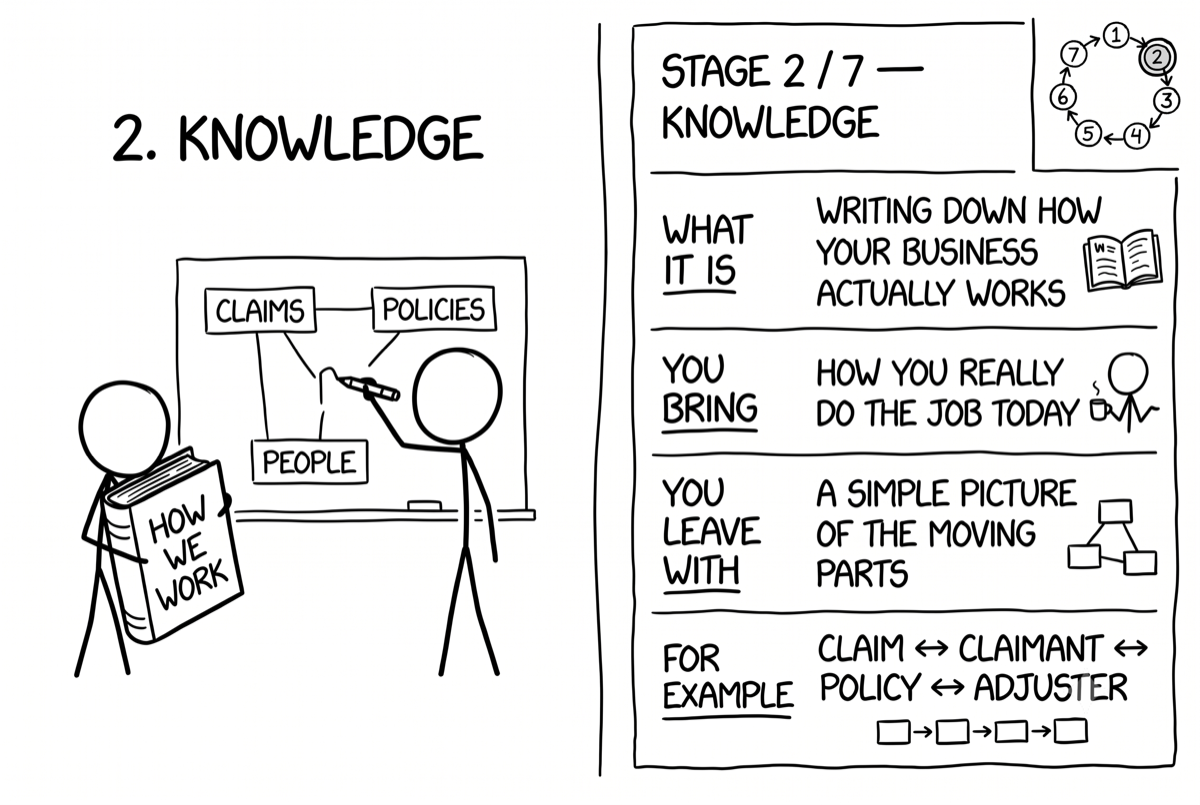
Captured notes organized into a structured model of the domain.

Align (drawn: Knowledge) — organize it into a shared model of your domain.
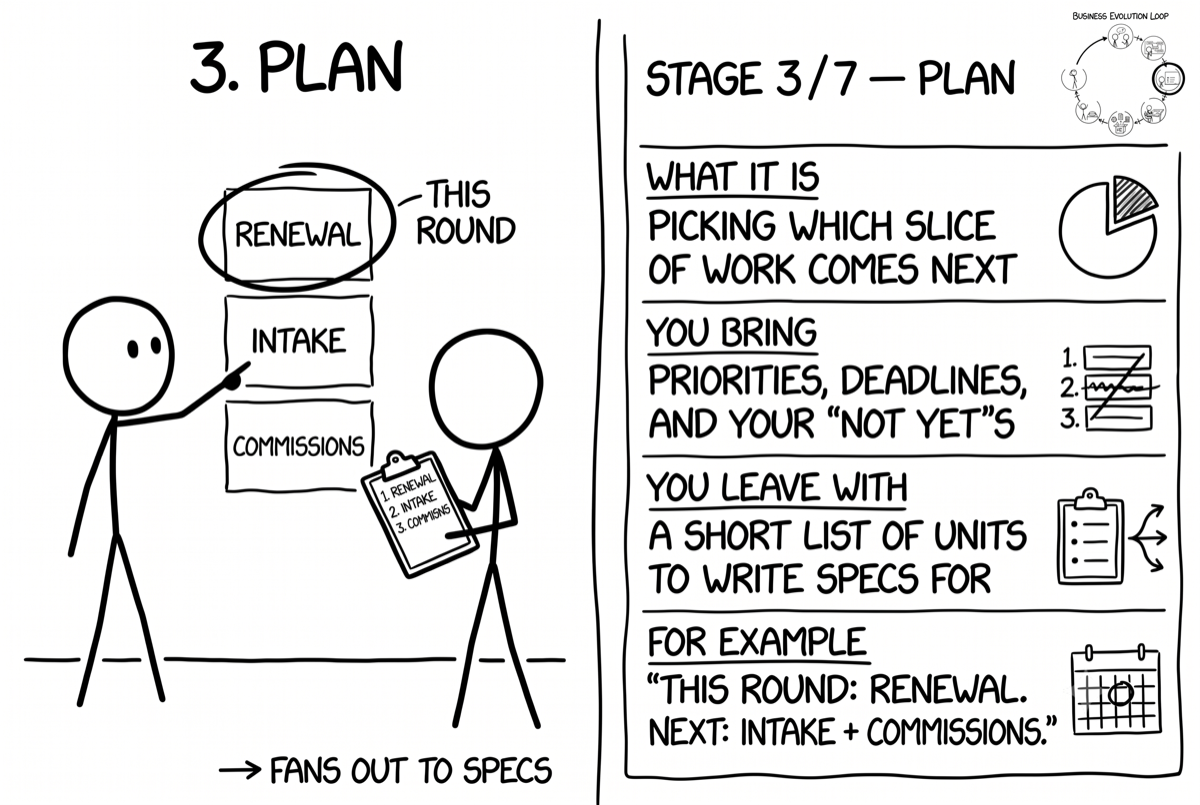
Scoping which units to change this iteration, and in what order.

Design (drawn: Plan) — scope what to build or change this round.
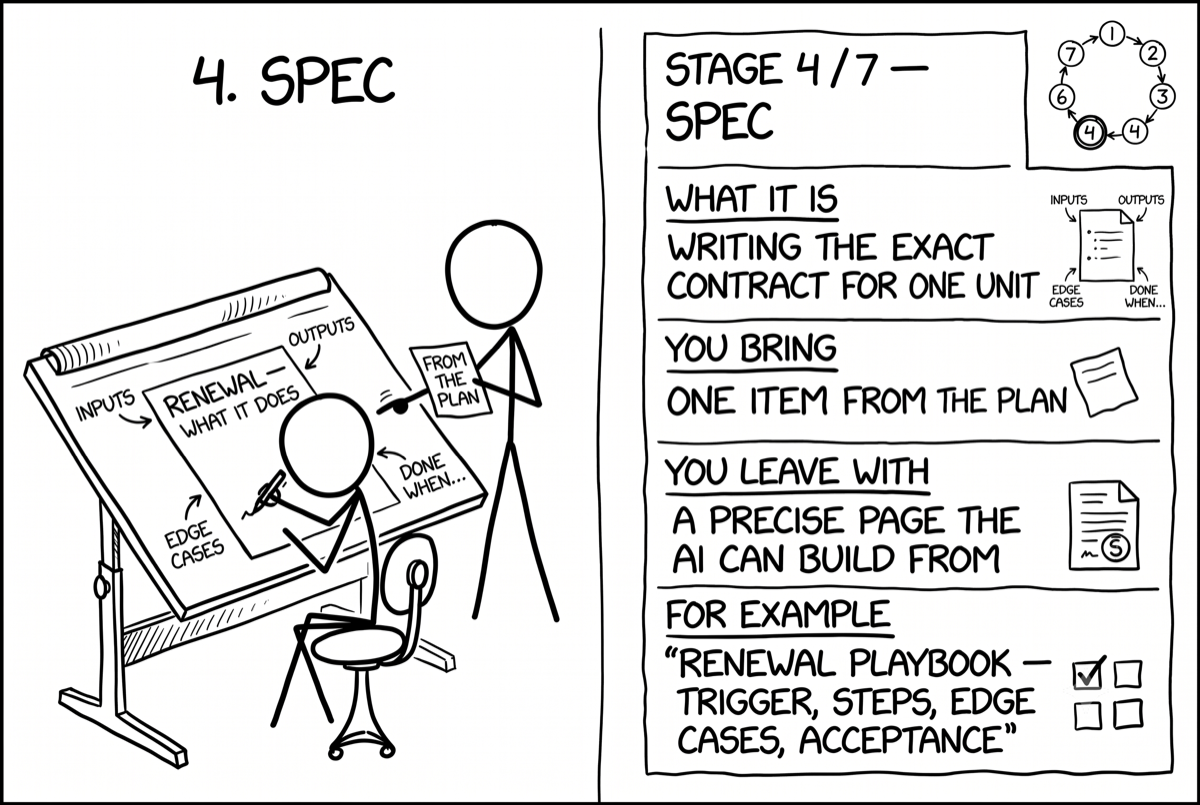
Writing the precise specification for each unit in scope.

Specify (drawn: Spec) — write each playbook precisely.
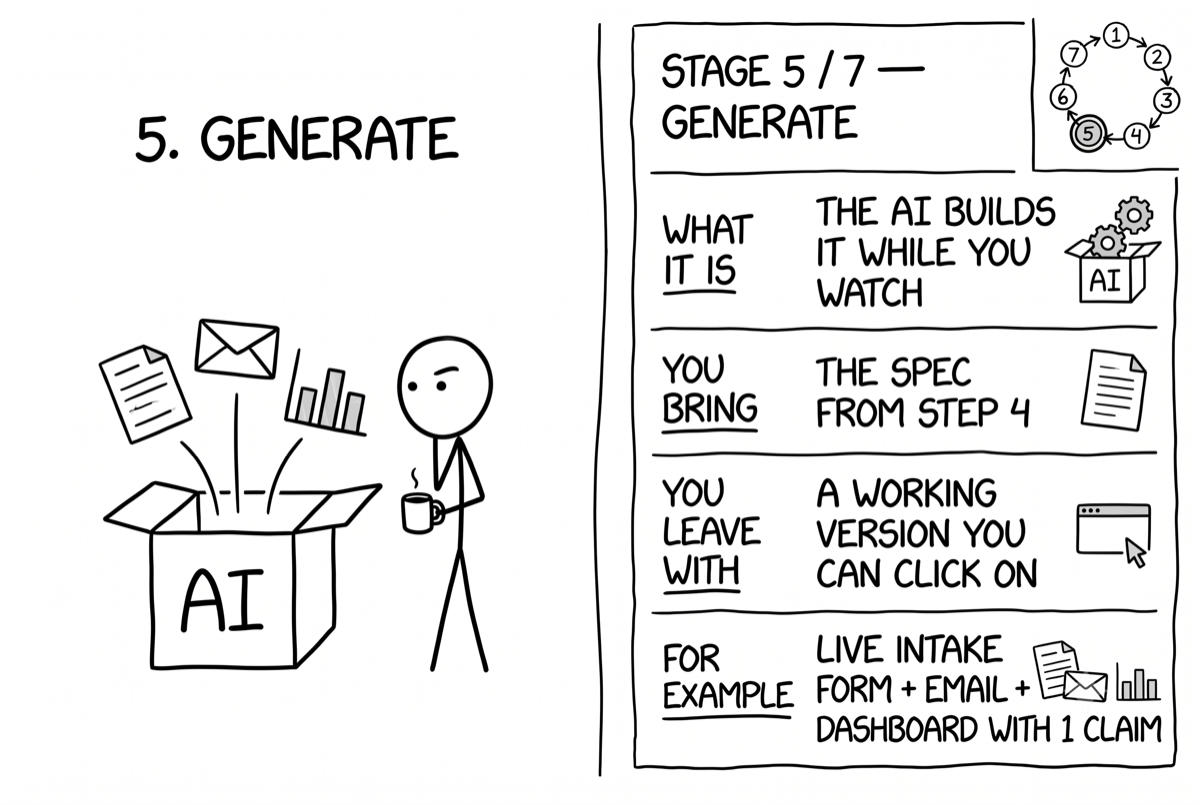
Each specification rendered into executable artifacts.

Create (drawn: Generate) — render the playbooks into a running system.
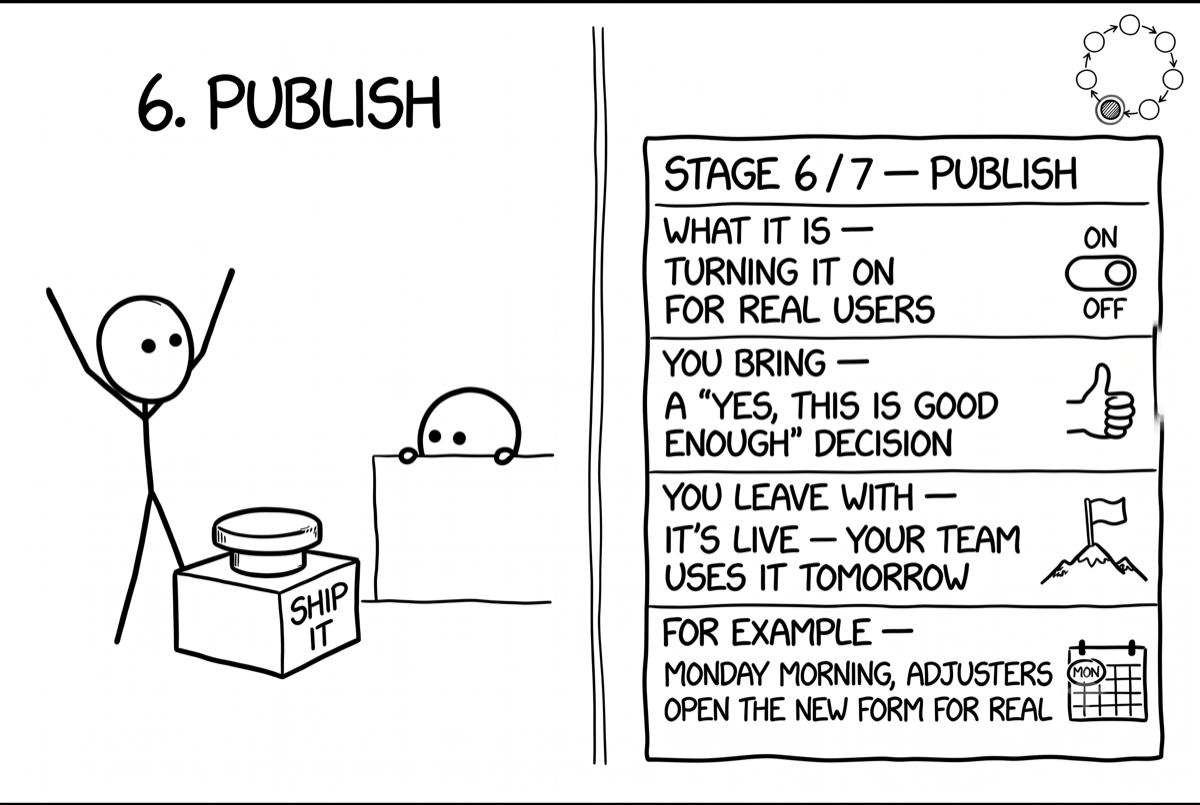
The generated artifacts going live; the operational system is running.

Run (drawn: Publish) — the system goes live and the team operates inside it.
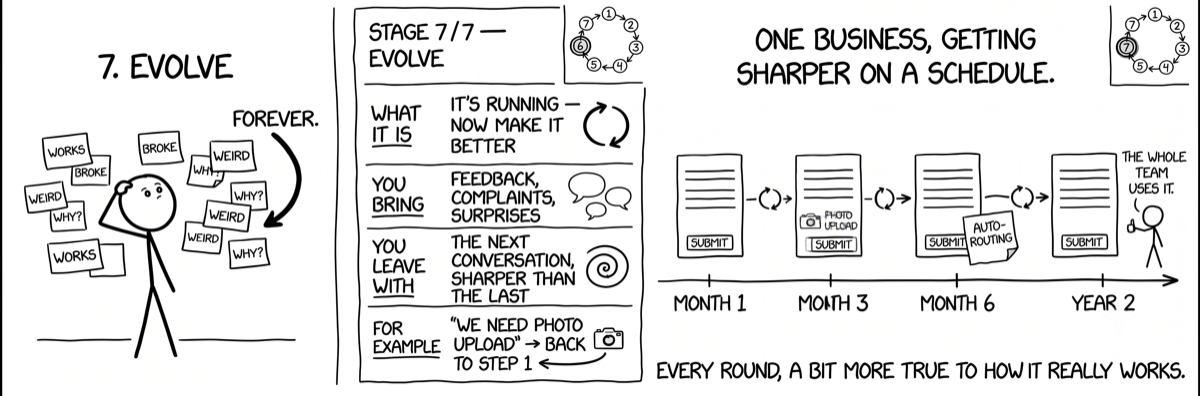
The loop running again as the business changes.

Evolve — the loop runs again; the playbooks are never finished.

One process, any output
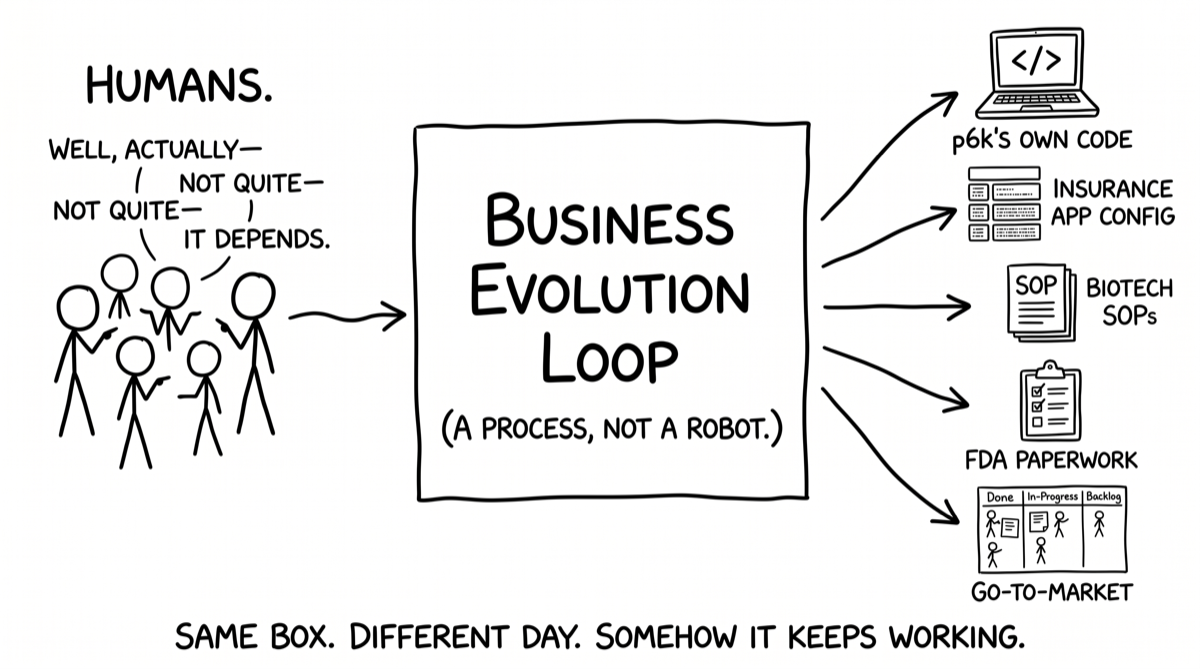
Humans feeding the Business Evolution Loop, which outputs p6k's own code, insurance app config, biotech SOPs, FDA paperwork, and go-to-market — same box, different day.

The same loop, whatever your business produces — operations, software, SOPs, compliance paperwork. The process is universal; the output is up to you.

Business Operations, drawn out
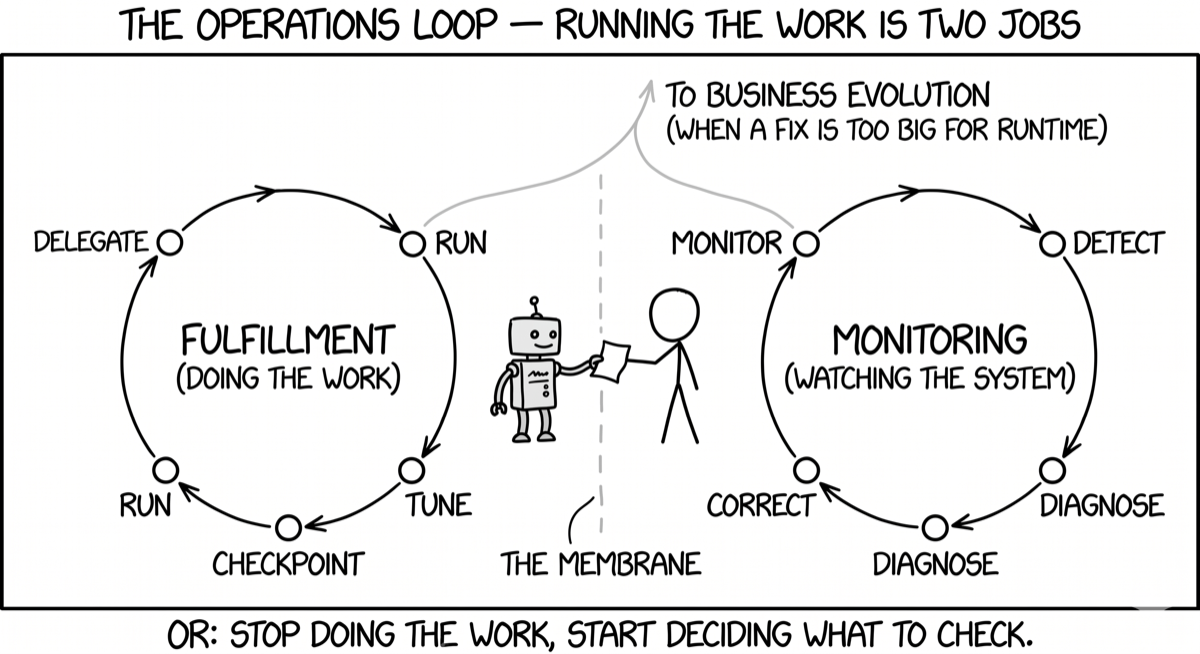
Two peer loops sharing one dashed membrane: Fulfillment (Delegate, Run, Checkpoint, Tune) and Monitoring (Monitor, Detect, Diagnose, Correct), both escalating upward to Business Evolution.

Two kinds of work. Fulfillment gets the work done; Monitoring watches the running system. They share one membrane where agent work crosses back to a human.
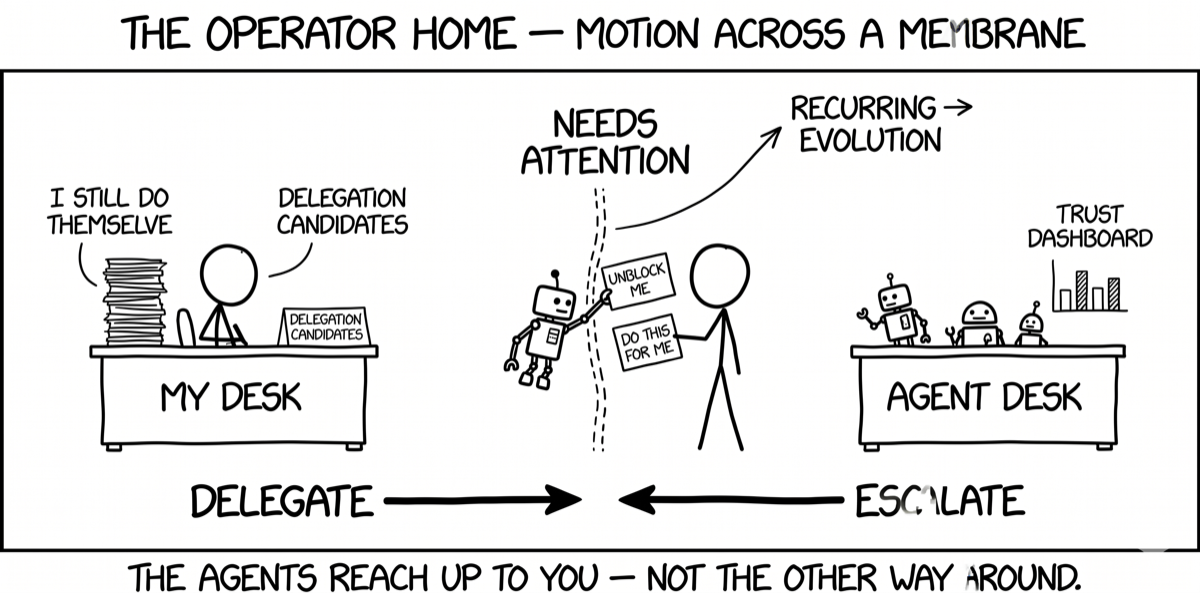
Three desks: My Desk (work you still do), Needs Attention (the membrane where an agent hands work back), and the Agent Desk (the roster and a trust dashboard), with delegate and escalate arrows.

The desk. Work in motion across a line — My DeskNeeds AttentionAgent Desk, with a recurring escalation rising back to Evolution.

Fulfillment, step by step
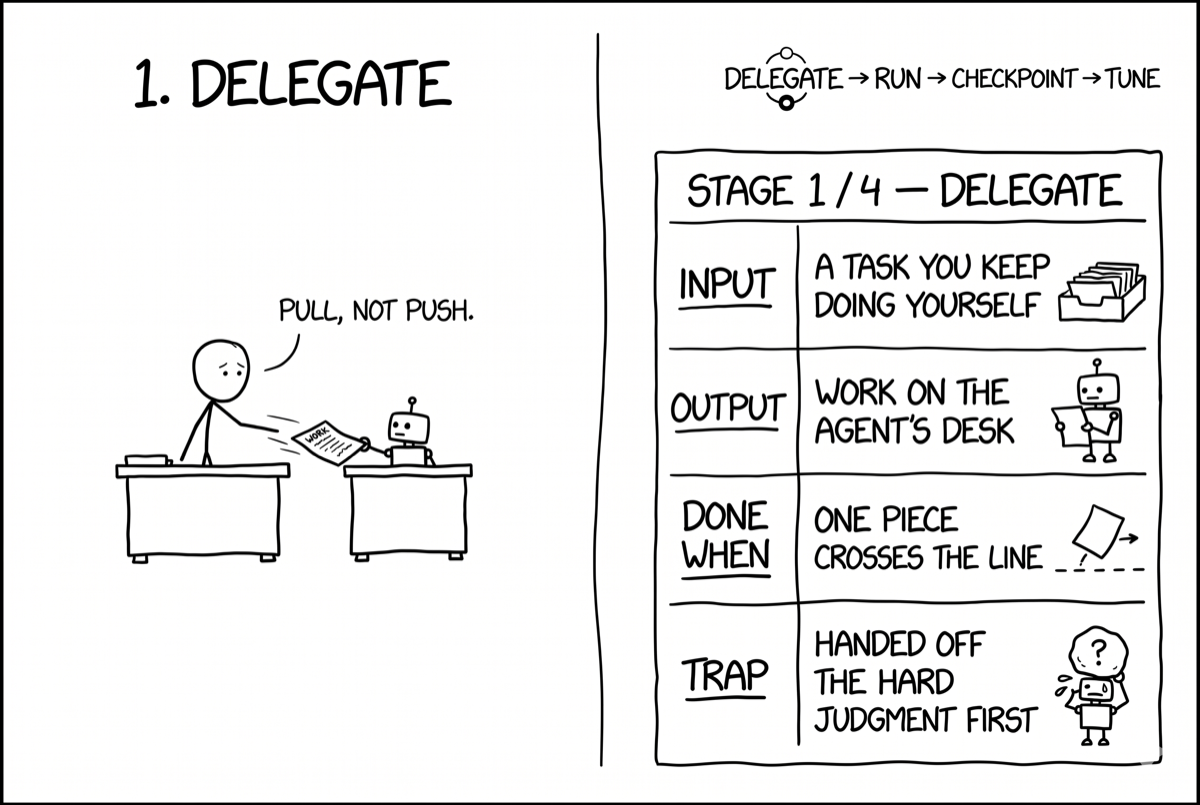
A stick figure slides a piece of work off their desk onto an agent's desk.

Delegate — move a piece of work to an agent. Pull, not push.
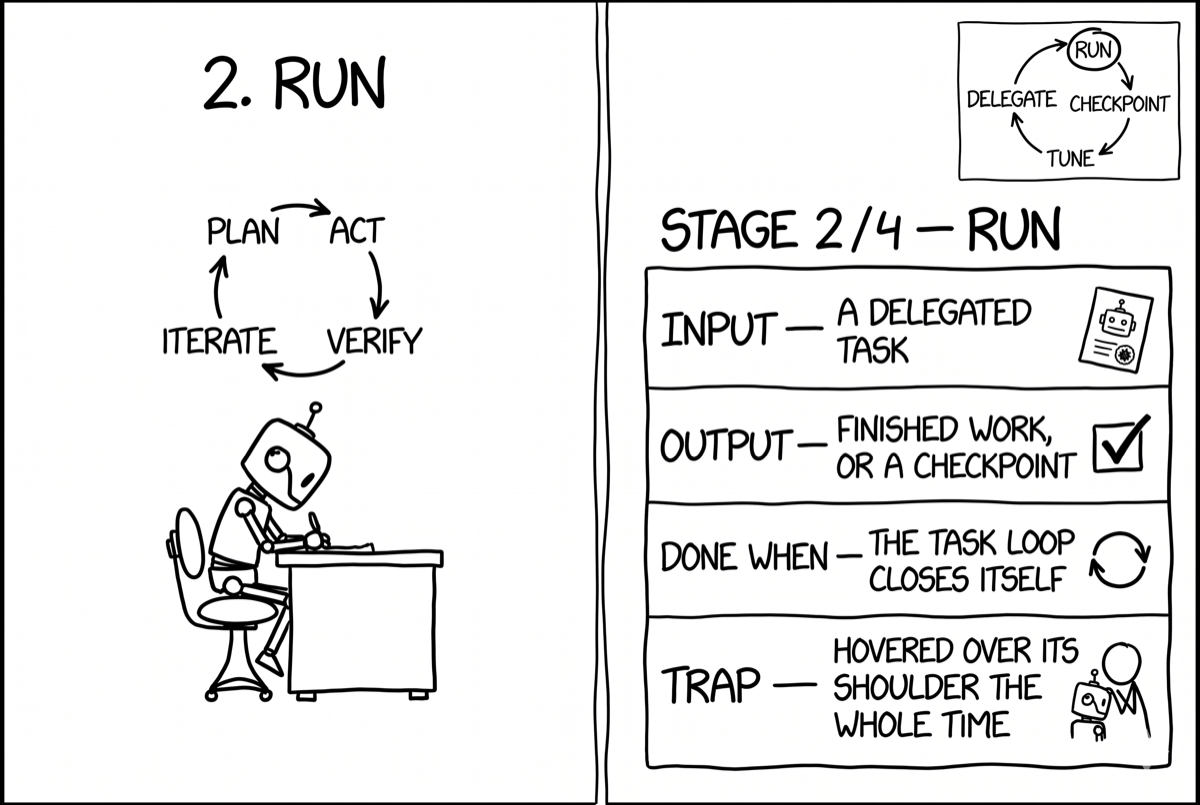
A stick-figure agent works a task autonomously, a small plan-act-verify-iterate loop spinning above it.

Run — the agent works the task on its own.
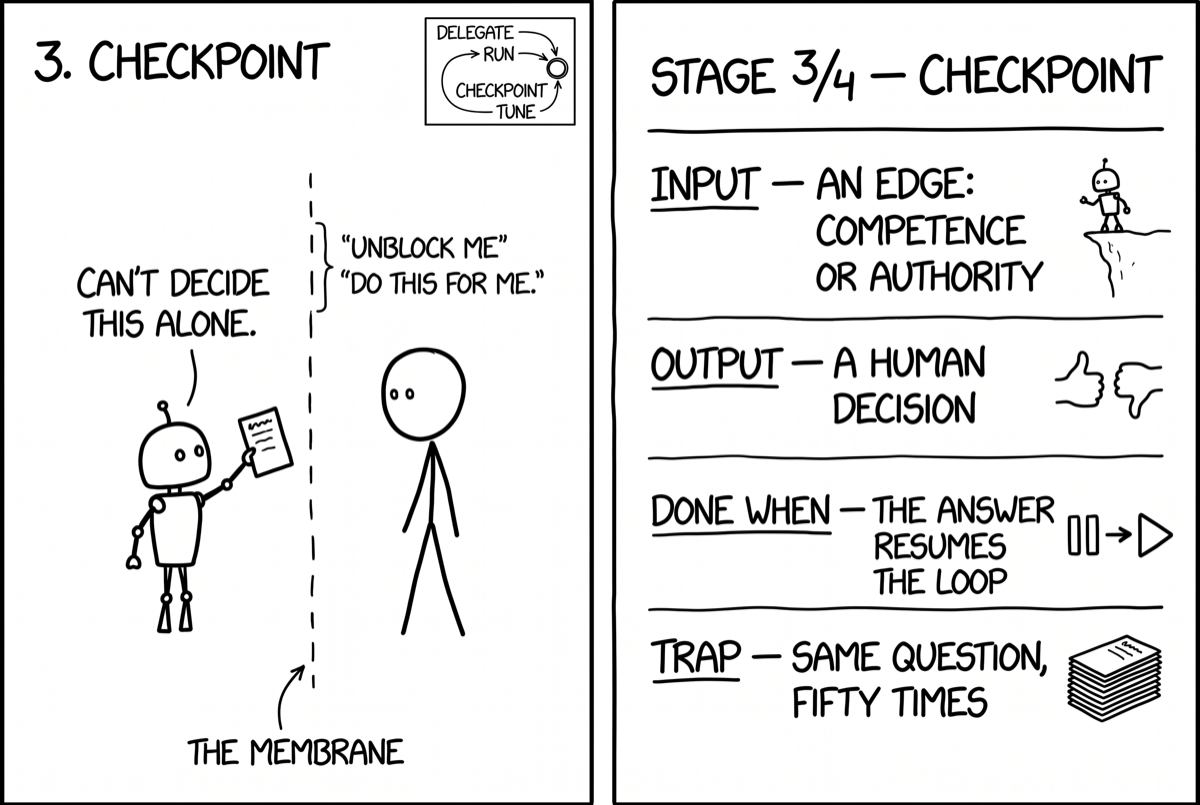
The agent reaches back across a dashed membrane to a human, holding a card it can't decide alone.

Checkpoint — it crosses back for what it can’t or shouldn’t decide alone.
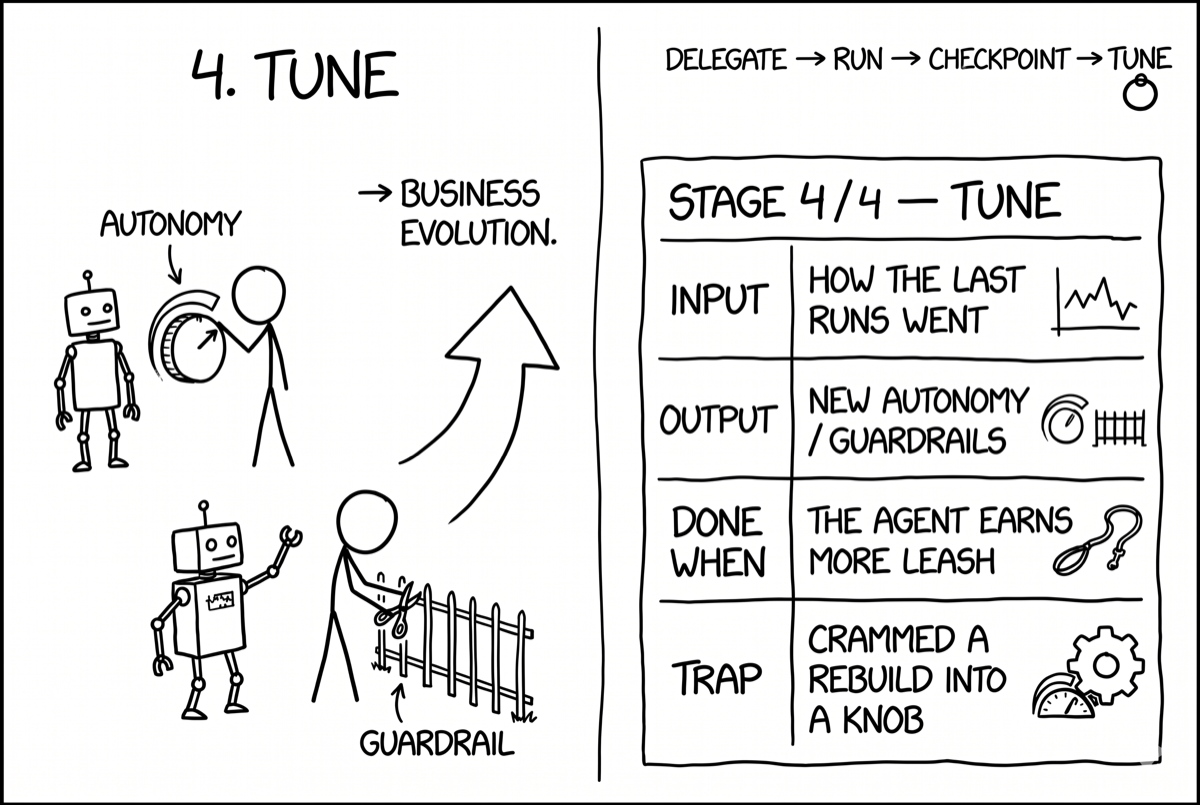
A human turns an autonomy dial up a notch; a bigger adjustment overflows into an arrow toward Business Evolution.

Tune — adjust trust in place; a structural change escalates to Evolution.

Monitoring, step by step
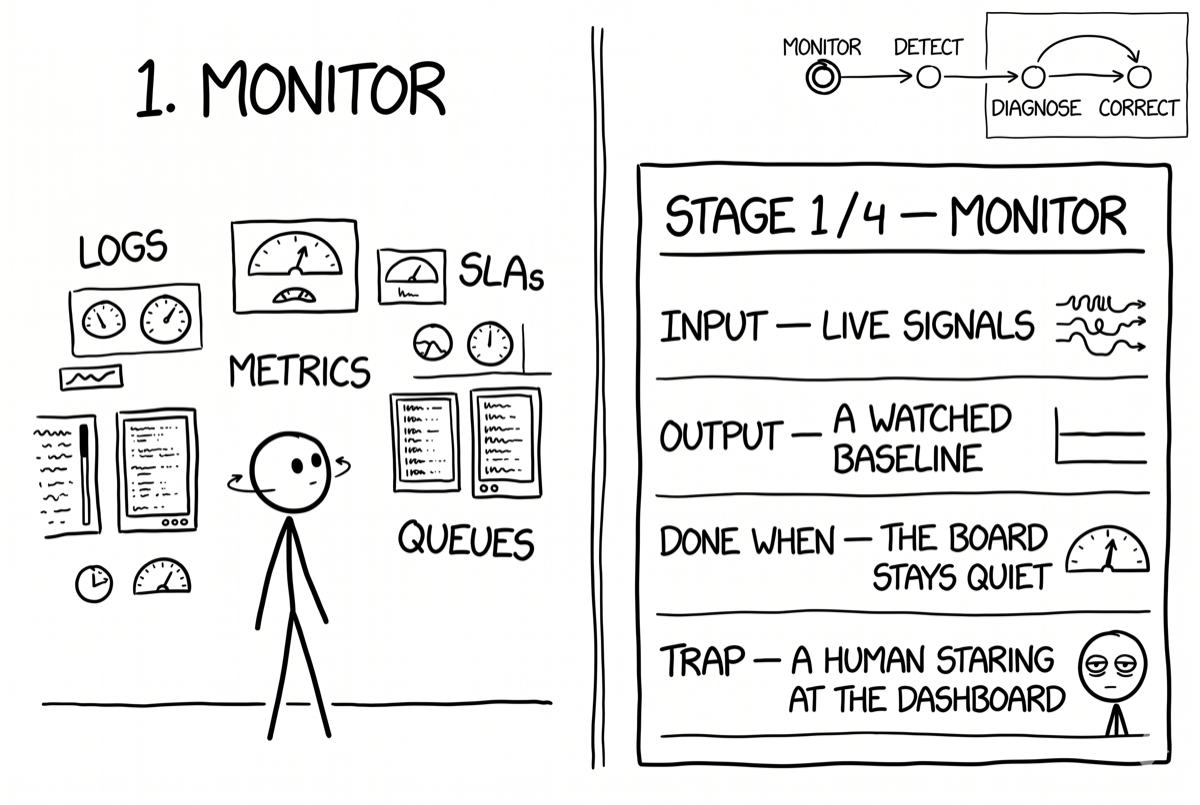
A scheduled agent watches a wall of dials and feeds — logs, SLAs, metrics, queues.

Monitor — agents watch the signals continuously.
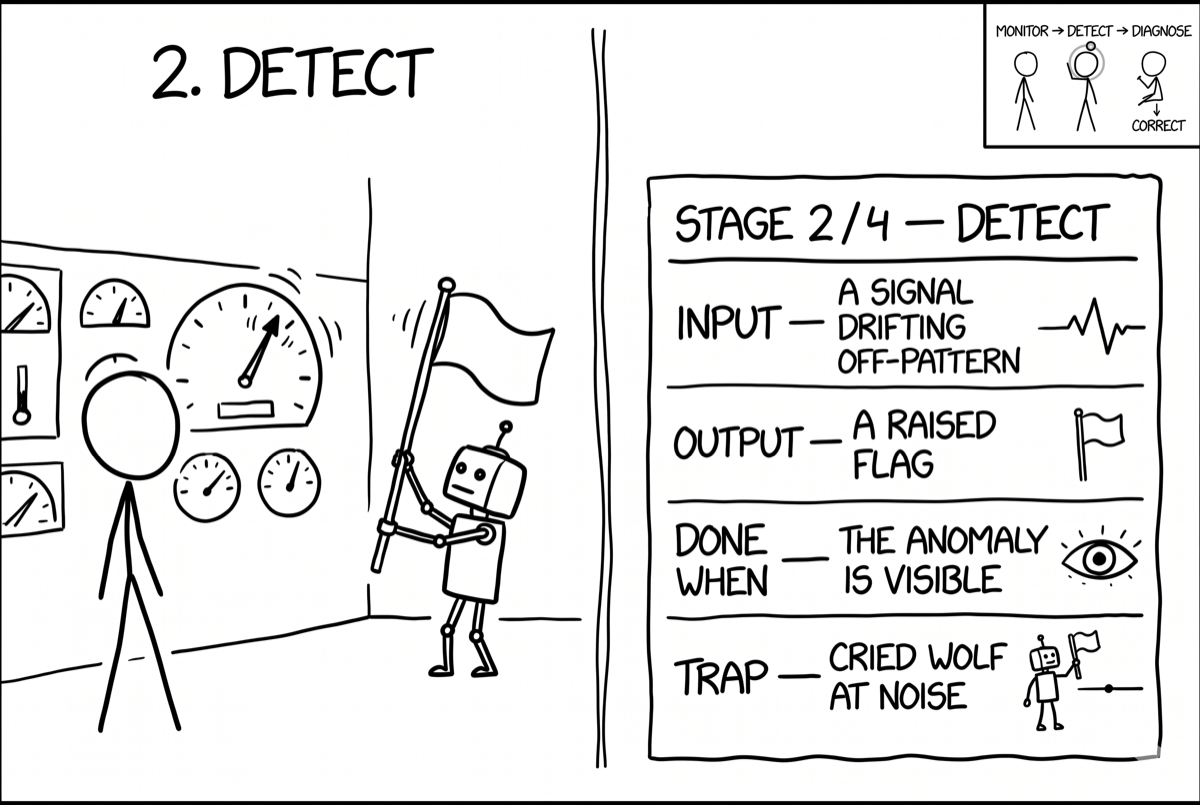
One dial spikes off-pattern; the agent raises a flag.

Detect — something off-pattern, a flag goes up.
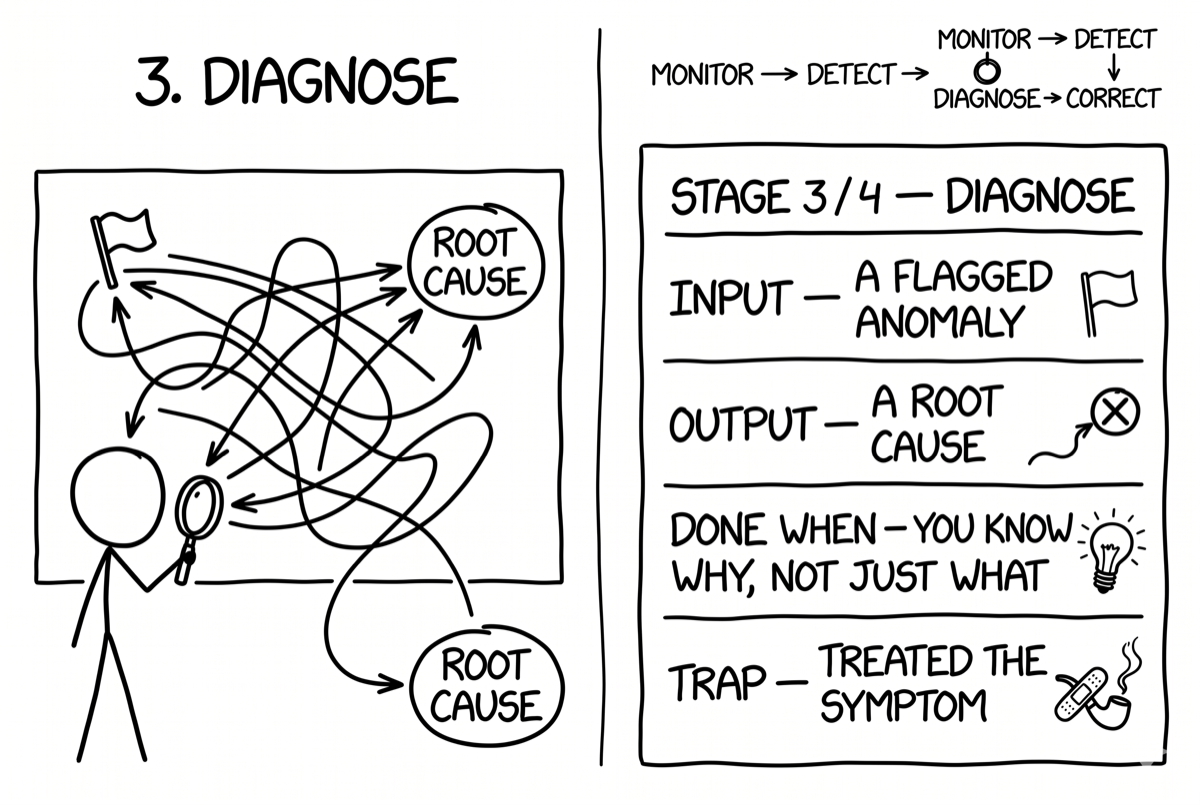
A figure traces the spike back through a tangle of arrows to one root cause.

Diagnose — trace it back to a root cause.
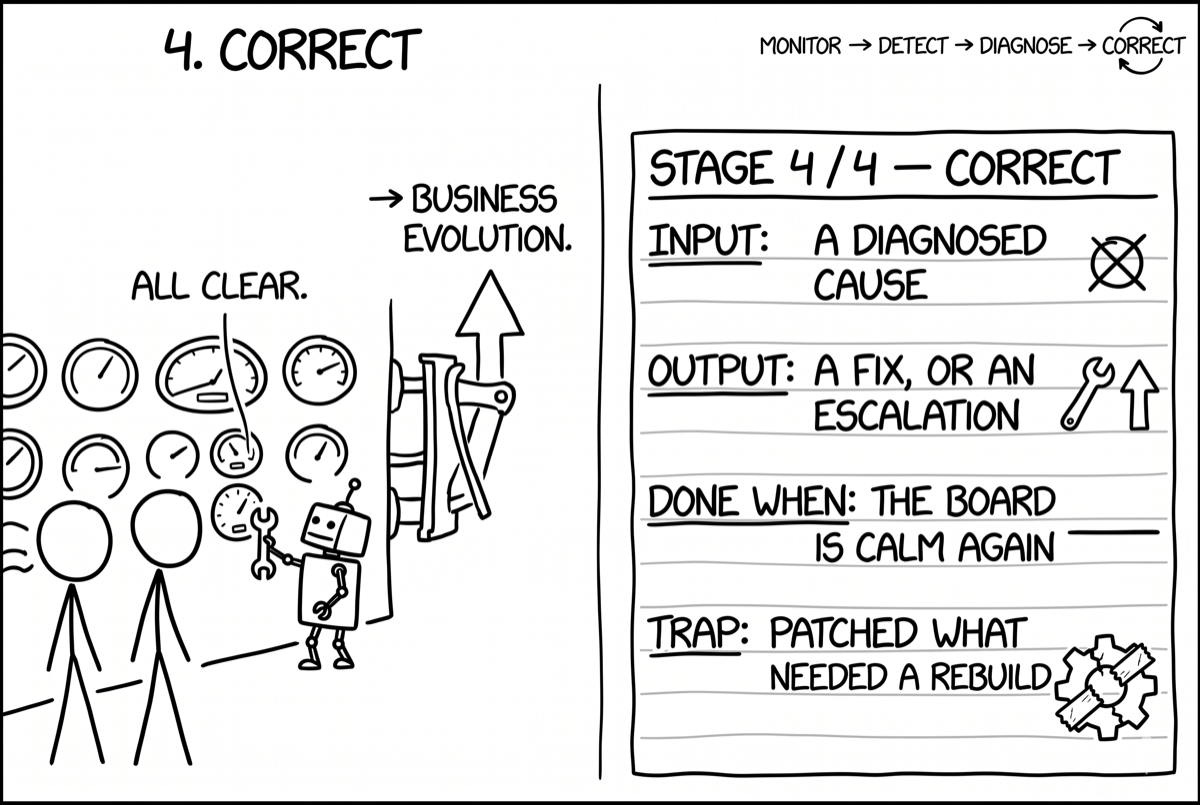
The board goes calm; a small fix applied at runtime, a structural one sent up to Business Evolution.

Correct — fix it at runtime, or send it up to Evolution.

Back to the plain-language pages: Business Evolution and The Operator.

Clippy